
Let me say the thing nobody says.
Getting laid off after 50 is terrifying. Not inconvenient. Not frustrating. Not “a blessing in disguise” — at least not at first. Terrifying. And if you’re sitting in that place right now, whether you just got the call or you can see it coming from three cubicles away, I want you to know that what you’re feeling is completely, entirely, and legitimately valid.
I know because I’ve been sitting in it too.
In January of 2025 I was diagnosed with an advanced form of Lymphomatoid Papulosis; a condition my oncologist describes as pre-Stage 1 Lymphoma. I went through eight weeks of chemotherapy. The chemo didn’t stop the breakouts, so by July I was put on oral chemotherapy indefinitely. I also tested positive for the genetic marker for Lymphoma, which means this isn’t something I manage for a while and move on from. This is something I’ll have to manage for the rest of life.
And then I got laid off.
I’m telling you this not because I want your sympathy. I genuinely feel fortunate compared to what others face with cancer diagnoses. The nausea and fatigue are manageable. My life is not in immediate danger. I know how lucky I am. But I’m telling you because when I lost my job, the first thought I had wasn’t about my career or my resume or my professional identity.
It was about my health insurance.
That’s the quiet part. That’s the part women in this situation don’t say out loud because we’re supposed to be resilient and strategic and forward-thinking. And we are all of those things. But we’re also humans who are scared. And scared is allowed.
The Part Nobody Warns You About
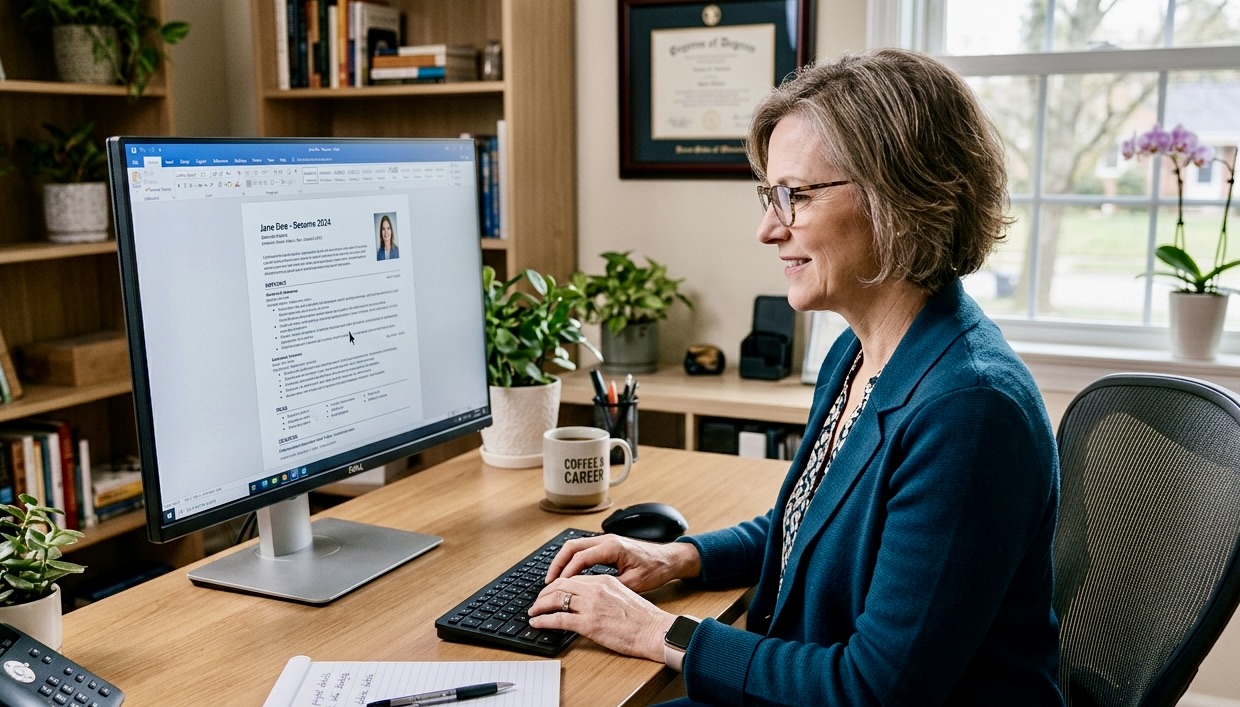
Here’s what the career coaches and the LinkedIn inspiration posts don’t tell you about getting laid off after 50 in tech.
It hits your identity in a way that’s hard to explain unless you’ve felt it. You’ve spent decades building expertise, credibility, and professional relationships. You know things that took years to learn. You have scars from projects that failed and victories from the ones that didn’t. And then one day someone calls you into a meeting and hands you a packet, and suddenly all of that feels strangely irrelevant.
It’s not. But it feels that way. And nobody warns you that it will.
Nobody warns you that the job market has changed in ways that feel almost designed to disadvantage you. That your decades of experience can somehow read as “overqualified” or “expensive” rather than “exactly what we need.” That platforms like LinkedIn (where you’re supposed to rebuild your visibility) have algorithms that quietly deprioritize women, and women over 40 especially. That you’ll do ‘everything right and still feel invisible.
Nobody warns you about the healthcare cliff. That the gap between your last day of employer coverage and your next source of insurance is a real and terrifying thing, especially if, like me, you are mid-treatment for something that requires ongoing monitoring and medication. COBRA exists, but COBRA is expensive. And the math of how long you can sustain it becomes a very personal and very high-stakes calculation.
And nobody warns you that all of this—the identity crisis, the job market, the insurance panic—happens simultaneously, while you’re also supposed to be updating your resume and networking and staying positive and telling everyone you’re doing great.
And we are doing great. And it’s also really, really hard.
Both things can be true.
What You Actually Need in Your Corner

Here’s what I wish someone had handed me on day one. Not a list of job boards. Not a reminder to update my LinkedIn profile photo. The real stuff.
Permission to feel it first. You’re allowed 48 hours (maybe 72) to be scared and angry and sad. Take them. Cry if you need to. Call your person and say the thing out loud. Because the moment you say it out loud it becomes slightly less enormous, and you can start to think clearly again.
Your network, activated honestly. Not the performative LinkedIn post announcing you’re “excited to be exploring new opportunities.” The real conversations. The friend who knows someone. The former colleague who always said call me if you need anything. Call them. People want to help, they just need to know you need it. In my case, a friend reached out about an opportunity with an interesting new startup. I would never have known about it if I hadn’t let people know I was looking.
AI as your thinking partner, not your ghostwriter. I used AI tools throughout this process; for interview prep, for research, for talking through my own positioning out loud when I needed to think clearly. It’s not cheating. It’s using every tool available to you, which is exactly what smart professionals do. If you don’t know where to start with AI, start here. That’s literally why this blog exists.
A clear-eyed look at your timeline. Know your numbers. How long does your severance carry you? What does COBRA cost and for how long can you sustain it? What’s your actual deadline, not the emotional deadline, the financial one? For me that answer was end of May. Knowing that number made every decision cleaner. It also meant I could walk into an opportunity with a startup and be honest: I want to do this, and here’s my real constraint. That honesty, it turns out, was exactly the right move.
Your own receipts. This isn’t the time for imposter syndrome. Pull out every result, every metric, every project you delivered. Write them down. The knowledge base that tested at four times industry average effectiveness. The system that saved X hours per week. The team you trained, the process you built, the problem nobody else could solve. You’ve got more receipts than you think. Use them.
What’s Waiting on the Other Side

I’m not going to tell you it’ll all work out perfectly because I’m still in it. The oral chemo continues. The startup opportunity is exciting and uncertain in equal measure. My brand new blush MacBook Neo (ordered as a celebration and an act of faith in whatever comes next) hasn’t even shipped yet.
But here’s what I can tell you from where I’m standing right now.
I walked into an interview with a space economy startup. Yes, I said space. Space, as in lunar and asteroid mining data and they offered me a job on the spot. Not because I pretended everything was fine. Because I was honest about what I knew, what I needed, and what I could do. I told them about my healthcare timeline. I told them my constraints. And they offered me the job anyway.
I’ve been contacted by two recruiters since my layoff, including one from a major financial institution offering a role similar to my previous position. Options do exist. The market hasn’t forgotten you exist, even when it feels like it has.
I started this blog because I believed women like us; smart, experienced, tech-capable women who refuse to be invisible, deserve a place that speaks to them directly.
Every week I show up here and say the thing out loud, and every week someone comments or messages me to say thank you. That response isn’t nothing. It’s everything.
You aren’t too old. You aren’t too expensive. You aren’t too much of anything. You’re exactly what you’ve always been — capable, resilient, and worth every bit of the fight.
The quiet part is this: it’s scary and it’s hard and some days it’s both at once.
The louder part is this: you’re still here. Still standing. Still figuring it out one honest conversation at a time.
So am I. And I’m not going anywhere.
Are you going through this right now — the layoff, the uncertainty, the healthcare panic, all of it? Or have you been through it and come out the other side with something worth sharing? Say so in the comments. The quiet part gets a lot less loud when we say it together. 💙👇
 - the blonde byte -