
And we’re already using them, thanks.
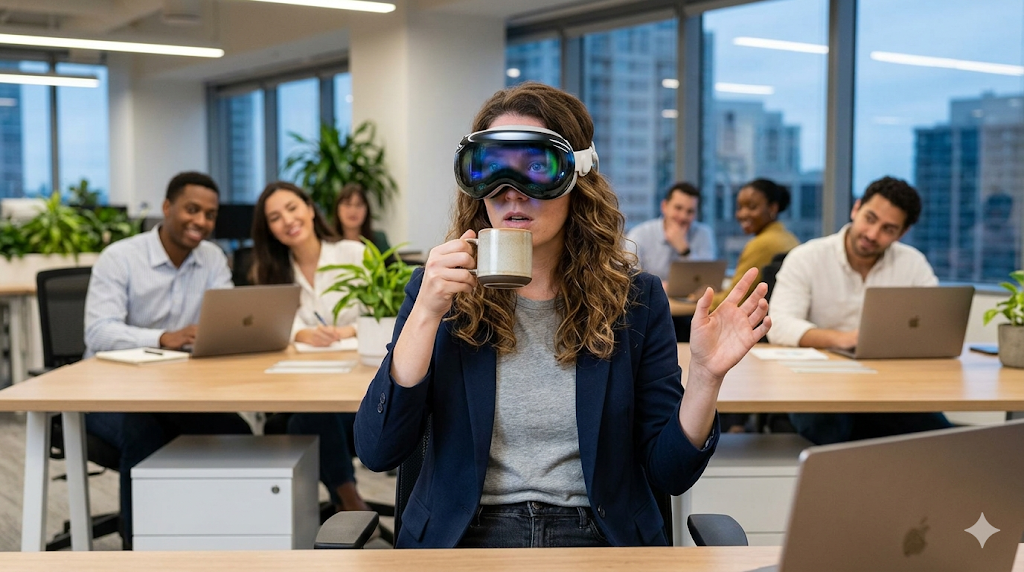
So let me get this straight. A room full of tech bros in khakis and business-casual polos sat around a whiteboard, probably fueled by cold brew and unchecked confidence, and decided the face was the next great frontier in wearable technology.
The face. My face. The one I spent 11 steps and $200 worth of serums preparing this morning. That face.
Clearly, nobody in that brainstorming session had ever applied a full beat of makeup, struggled with prescription lenses, or experienced the quiet joy of a double-cleanse at the end of a long day. Because if they had, this conversation would have gone very differently.
The Glasses Situation (Or: Did Anyone Even Try These On?)

Let’s start with the most obvious question — one that apparently stumped some of the brightest minds in technology: What about the roughly 164 million American adults who already wear glasses?
The solutions so far range from “wear contacts instead” (oh, thank you, I hadn’t considered fundamentally changing my vision correction routine for your gadget) to “we offer prescription lens inserts” at an additional cost that could fund a small vacation. And if you’ve got progressive lenses, bifocals, or a particularly stylish cat-eye frame? Good luck. Those ergonomic considerations apparently didn’t make it past the prototype stage — probably because the focus group was twelve guys with 20/20 vision.
Houston, We Have a Foundation Problem
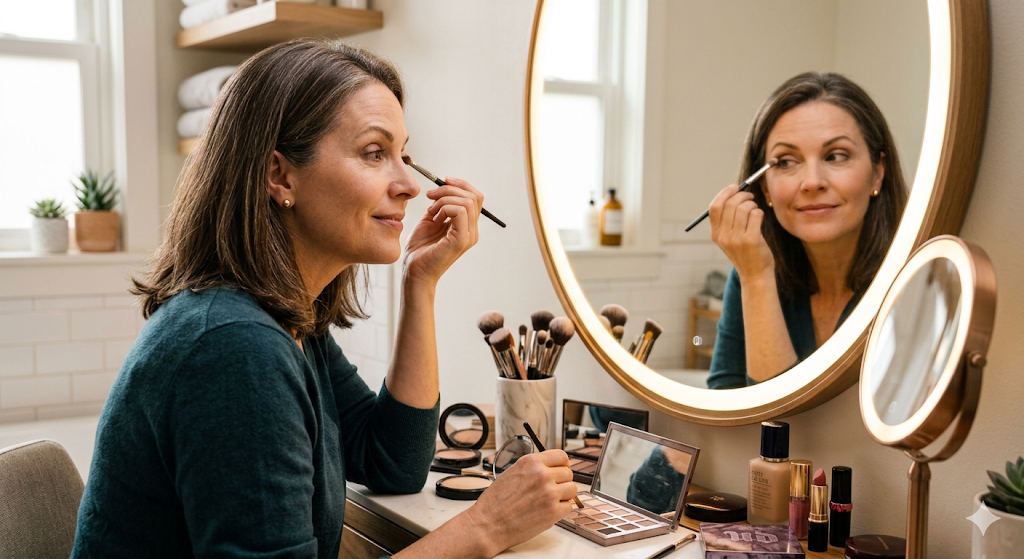
Women collectively spend billions of dollars a year on makeup. Foundation, concealer, setting powder, blush, bronzer, highlighter — we have layers, people. Beautiful, carefully blended layers. So when you strap a piece of technology across my nose and cheeks, you get a lovely imprint pressed into my $54 foundation like a technological crop circle, lens transfer that would make a forensic investigator weep, and me looking like I applied my makeup in a wind tunnel after I take the thing off.
And our faces are not dry, matte, product-free surfaces. They are ecosystems. Retinol, hyaluronic acid, niacinamide, peptides, and enough SPF to protect a small nation. So here’s my question for the hardware engineers: Are your nose pads rated for salicylic acid? Has anyone stress-tested the silicone gaskets against a generous application of snail mucin? (Don’t judge me, it works.)
Let’s not forget the end of the day either. Makeup remover, cleansing oil, micellar water — these are literally designed to dissolve things off your face. So is my Korean skincare of the week quietly waging chemical warfare on a $3500 piece of technology? Nobody knows, because I don’t think anybody thought to ask.
The Comfort Conversation Nobody’s Having
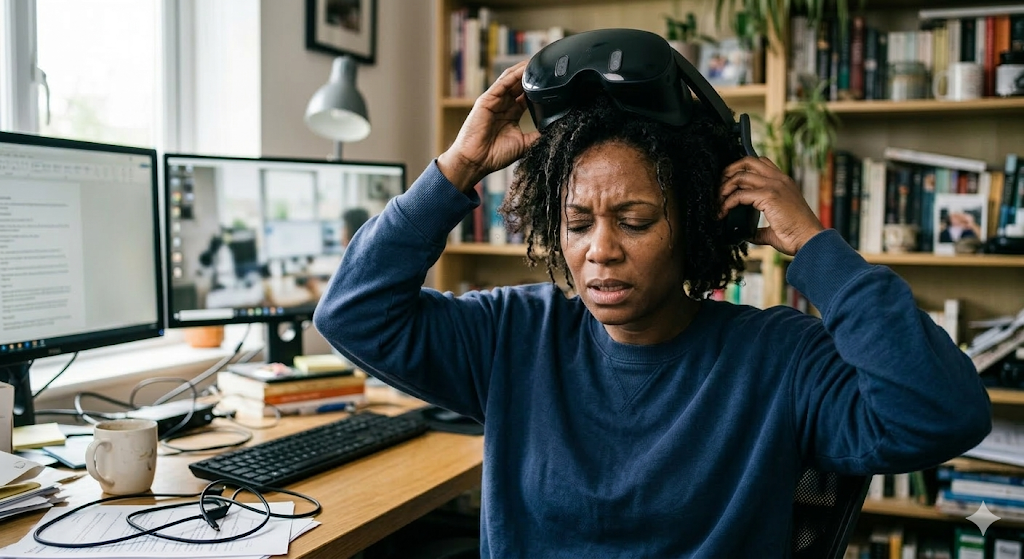
Many of these devices create pressure points on the nose and temples — the exact areas where women who wear glasses already deal with discomfort. Now add the weight of cameras, batteries, and processors. And because gravity remains undefeated, some devices come with head straps to keep the whole operation from sliding down your carefully moisturized face. Head straps. Like we’re suiting up for a VR spelunking expedition just to check our email.
And don’t get me started on what those straps will do to our hair…
That blowout you spent 45 minutes perfecting? Gone. That sleek low bun you pinned into submission with fourteen bobby pins and a prayer? Destroyed. Your carefully crafted beach waves that you diffused, scrunched, and absolutely did not touch until fully dry? Flattened into what can only be described as “hat head’s more aggressive cousin.”
We’re spending $80 on bond-repair treatments and sleeping on silk pillowcases to prevent breakage — only to strap an elastic band across the back of our heads like we’re gearing up for a middle school science lab.
How dare you, Apple.
The Real Issue: We Weren’t in the Room

Here’s the thing — the problem isn’t really about foundation or serums or prescription lenses. Those are symptoms. The actual problem is that women weren’t adequately represented in the design process. (At least, that’s what it feels like.) When your product development team looks like a copy-paste of the same person, you get products designed for that one person. And that person apparently is bald, has perfect vision, and no skincare routine to speak of.
I’m not anti-technology. I’m not even anti-face-technology. I’m anti-lazy technology. I’m anti-“we’ll figure out the women thing later” technology.
Until then, I’ll be over here with my phone in my hand and my perfectly blended contour intact, waiting for Silicon Valley to remember that half the world’s faces come with a few extra considerations.
And maybe — just maybe — next time, invite a mature woman to the product meeting. Preferably one with a ten-step skincare routine and strong opinions. She’ll save you millions in market research. You’re welcome.
Got thoughts on face-worn tech? Have you tried any of these devices and lived to tell the (foundation-stained) tale? Drop a comment below — I want to hear your horror stories.
 - the blonde byte -